KARACHI: The United Nations Office for Project Services (UNOPS) has handed over $7.6 million worth of water supply and sanitation infrastructure to the Public Health Engineering Departments of Sindh and Khyber Pakhtunkhwa (KP), introducing solar-powered systems designed to reduce long-term operating costs and improve access to clean water in underserved communities.
Funded by the United States Department of State, the initiative includes six drinking water supply schemes, more than 40 kilometres of water distribution pipelines, and over 1,300 water collection points across Umerkot district in Sindh and Tank district in KP.
The newly transferred infrastructure is expected to provide safe drinking water to nearly 300,000 people. In addition, a fully equipped water quality testing laboratory has been established to support continuous monitoring for approximately 164,000 residents, while six school sanitation blocks will improve hygiene facilities for around 6,440 students.
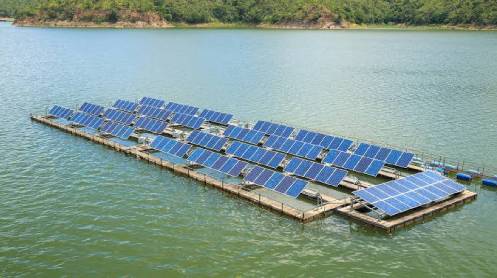
A key feature of the project is its renewable energy component. UNOPS installed more than 0.5 megawatts (MW) of solar power capacity across the water supply schemes, enabling them to operate independently of the national electricity grid.
The solar-powered systems will significantly reduce recurring electricity and diesel costs for provincial authorities while lowering carbon emissions and ensuring more reliable water services in remote areas.
The project is also expected to generate socio-economic benefits. With clean water available closer to their homes, women in the beneficiary communities will spend less time collecting water and will be able to dedicate more time to income-generating activities such as handicrafts, kitchen gardening, and agriculture, contributing to improved household livelihoods.
Following the handover, the Public Health Engineering Departments of Sindh and KP will assume responsibility for operating and maintaining the infrastructure. To ensure long-term sustainability, UNOPS will conduct capacity-building programmes covering system operation and maintenance, water quality monitoring, and project management.
The initiative combines renewable energy technology, institutional capacity development, and provincial ownership to create resilient public infrastructure that reduces operating costs, expands access to clean water, and strengthens economic opportunities for rural communities.